
Sports Photography... at Night!
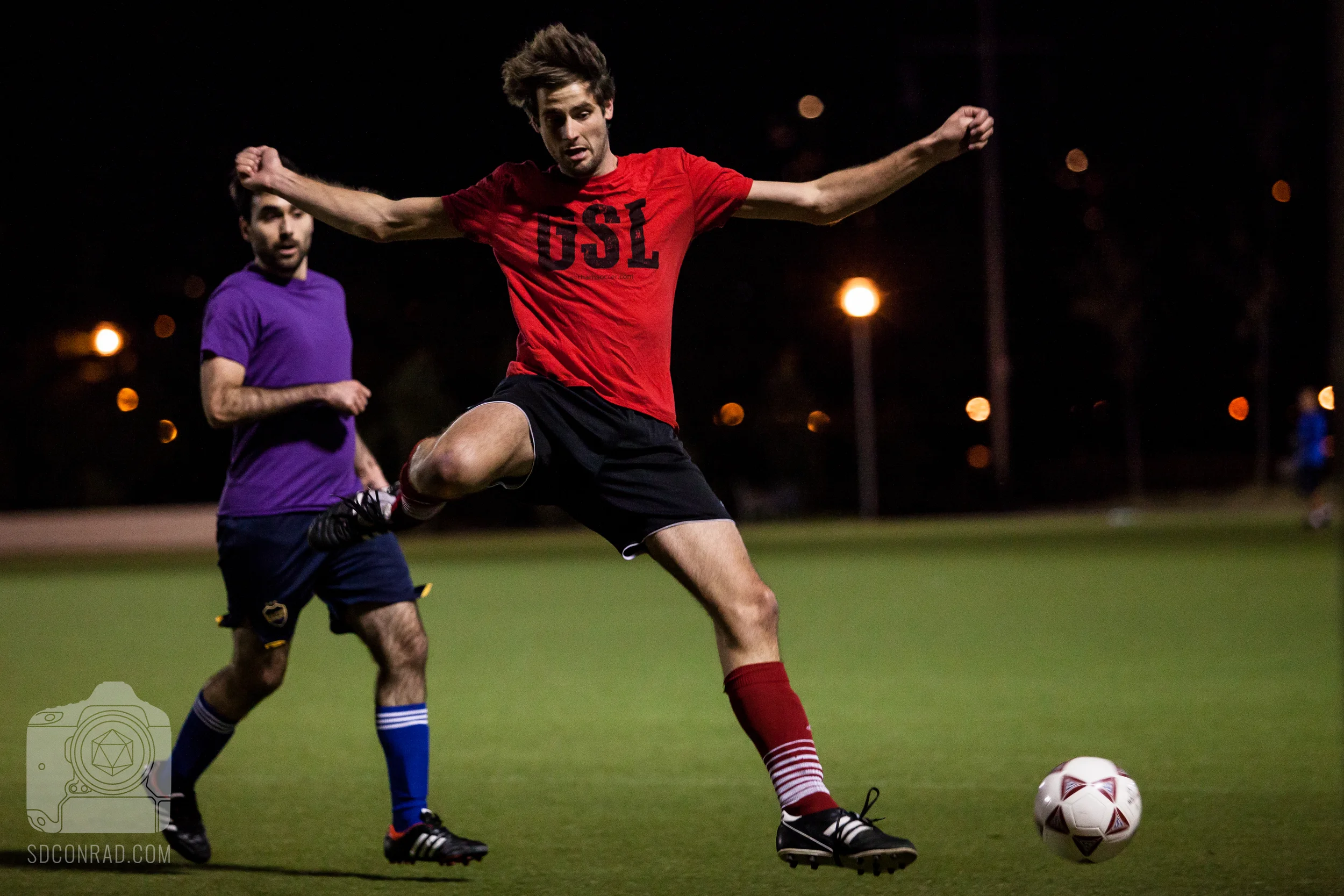
Successful sports photography requires pretty much only one thing... a high shutter speed. We're talking upwards of 1/1000th of a second. The problem is, a fast shutter speed like that requires a lot of light.
Successful sports photography requires pretty much only one thing... a high shutter speed. We're talking upwards of 1/1000th of a second. The problem is, a fast shutter speed like that requires a lot of light. With the power of the Sun, you won't have to worry about much, that's pretty much a no-brainer. But once the Sun goes down you have to make your own light sources. Photographers do this regularly with their own lights or with lights they rent. They can control them by moving them around, adding filters, flags, scrims, silks, whatever you have to throw in front of the light, it's up to you to use. There are unfortunate circumstances where you are required to shoot in a dark place and you have absolutely no control over the light. This is the challenge I've been facing once a week for the past month as I've been photographing for Gotham Soccer League.
While the fields they use are illuminated, these are not professional stadiums they're playing in, so they're still a little dim for my liking. One challenge I've faced is that I have to decide between a really high ISO, practically the maximum ISO my camera can handle, meaning all the shots will have more "noise." This will allow me to use a higher shutter speed, reaching my target of 1/1000th of a second. Or I can use a lower ISO, experiencing less noise, but I might encounter some motion blur. I decided a little blur isn't the end of the world, as motion blur in sports simply shows motion. I mean, these are action shots after all. The 1/1000th of a second shutter speed will stop time. So sometimes I switch back and forth getting a little with more blur and a little without.
For these games I shoot at an aperture of f/2.8. This allows for more light to hit the censor and creates a nice depth of field. The only issue is that, depending on the subject's distance from the camera and what millimeter my camera is zoomed to, the depth of field can sometimes be pretty narrow. When a player is running directly at me, I only have about of meter or less for them to be in focus. So I often hold my autofocus button (which I've remapped to the back of my camera) and hold the shutter down and hope for the best. It's during free kicks and goal kicks when I can take my time to set frame and focus.
One important thing to include in sports photography is the scenery. As I stated before, I'm not shooting in stadiums. There's rarely an audience and usually it's just friends and family of the people playing. These players are playing for the love of the game, not for the fame and fortune that comes with being an athlete. But, we do live in NYC, which offers amazing views from time to time. After living here for years it's easy to forget the beauty the city has to offer.
Dog Portraits
For many years I worked as a dog walker and it was during that time that I started getting interested in photography. My background is in cinematography, but after working on a few bad crews the whole idea of working in film and video lost its luster and I was sorta lost as to what to do next.
For many years I worked as a dog walker and it was during that time that I started getting interested in photography. My background is in cinematography, but after working on a few bad crews the whole idea of working in film and video lost its luster and I was sorta lost as to what to do next. When I bought a Canon Rebel XTi way back when, that's when I remembered I still loved pictures, be it motion or stills, I wanted to be behind a camera. One problem I faced was I didn't know what I wanted to photograph, I had no idea where to begin. I also had to remember what it takes to take a decent picture and I had to learn digital photography. I pretty much only knew film at that point and had spent some time in a dark room. Lucky for me, my job answered many of the questions I had.
Photographing dogs was the easiest option for me. I was around at least a dozen a day and the company I worked for had hundreds of clients. On slow days I'd photograph some of the dogs and send them to my employer, who would put them on our Facebook page. I was happy to have subjects and happy to have a place to showcase my pictures. A few years later, my employer grew tremendously and we began hosting events where I would do a photobooth type of thing for dogs.
This turned in to a much different experience than just photographing dogs on the street. One issue I ran in to very early on was getting dogs to look at the camera. Dogs tend to not look directly at the camera. My theory is that they might think of it as a big eye. Dogs don't like making eye contact with strangers, so maybe they see my camera as a stranger with a big eye? Or maybe its the reflection in the lens? Or maybe its just the fact that I'm pointing a big black box at them that makes a weird snapping noise? Either way, I have to be quick with the trigger to get them looking in the camera.
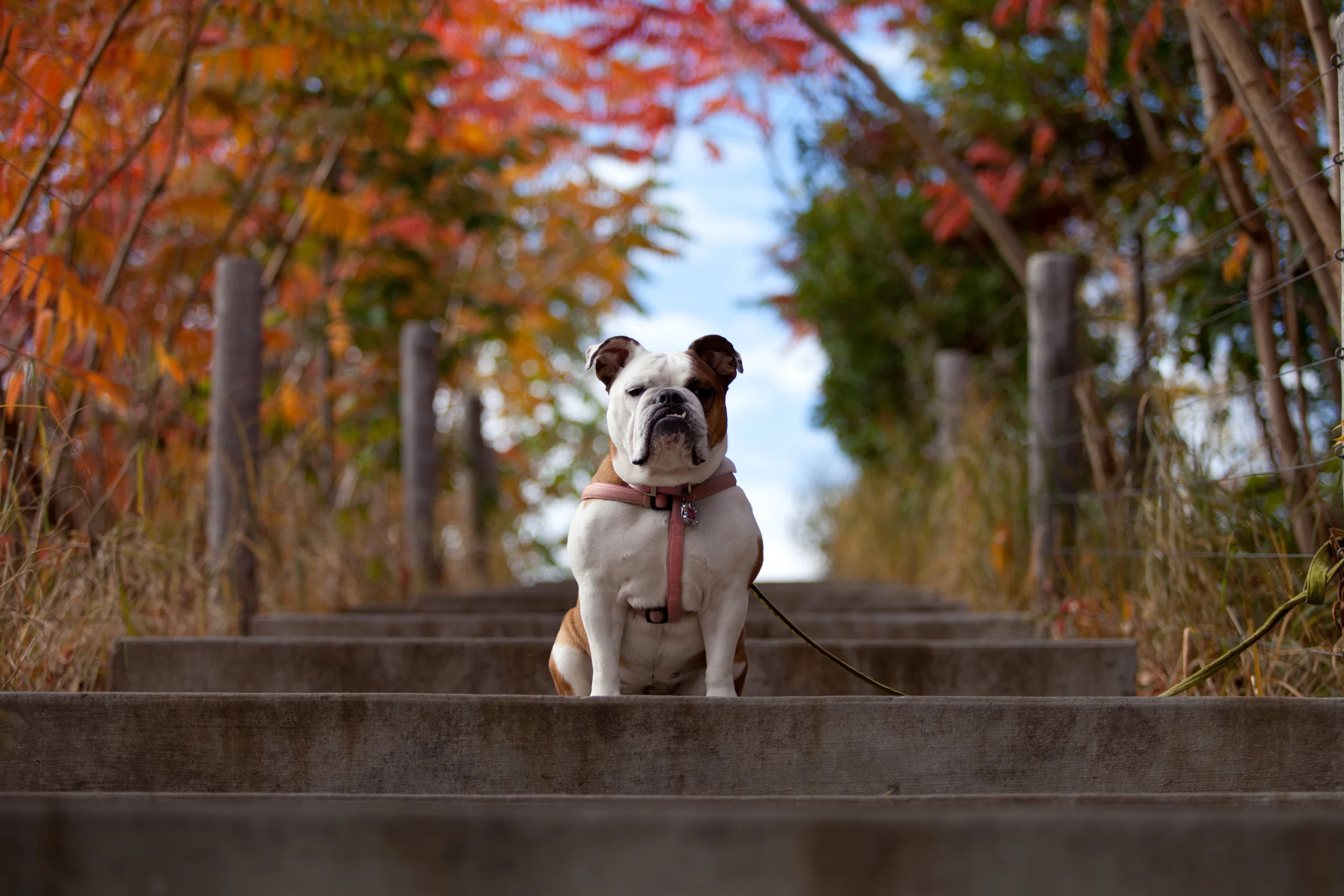
But after shooting for a while I realized that dogs don't always need to look directly in the camera for it to be a decent shot. The photo above is of my pal Gracie, who just happens to be very comfortable in front of the camera. I got lucky with her but 90% of the time I have to try to make a decent picture of a dog who won't look anywhere in my direction. Most recent example of this was just this last weekend I took pictures of my friend's dogs just for fun.
This is Rupert. He's actually not so bad about not looking in to the camera but I chose this picture for him to match his room mate County.
County wasn't too in to having his picture taken. I decided for the final shots County and Rupert's portraits should be similar since they live together. I wish I had gotten lower for County's, but I'm a tall guy and they're small dogs! He's also a little bit more profile than I'd like. Rupert is closer to the 45 degree angle I was looking for, County is almost 90 degree away. But you can still see expression in his eyes and ears, which is the goal for any dog portrait, despite the angle.
Dog portraits are both fun and challenging. I get to spend time with man's best friend and usually I'm outside and enjoying the weather as well. But dogs have a mind of their own and if they don't want their picture taken they're going to make your job extremely challenging.
Onderdonk House
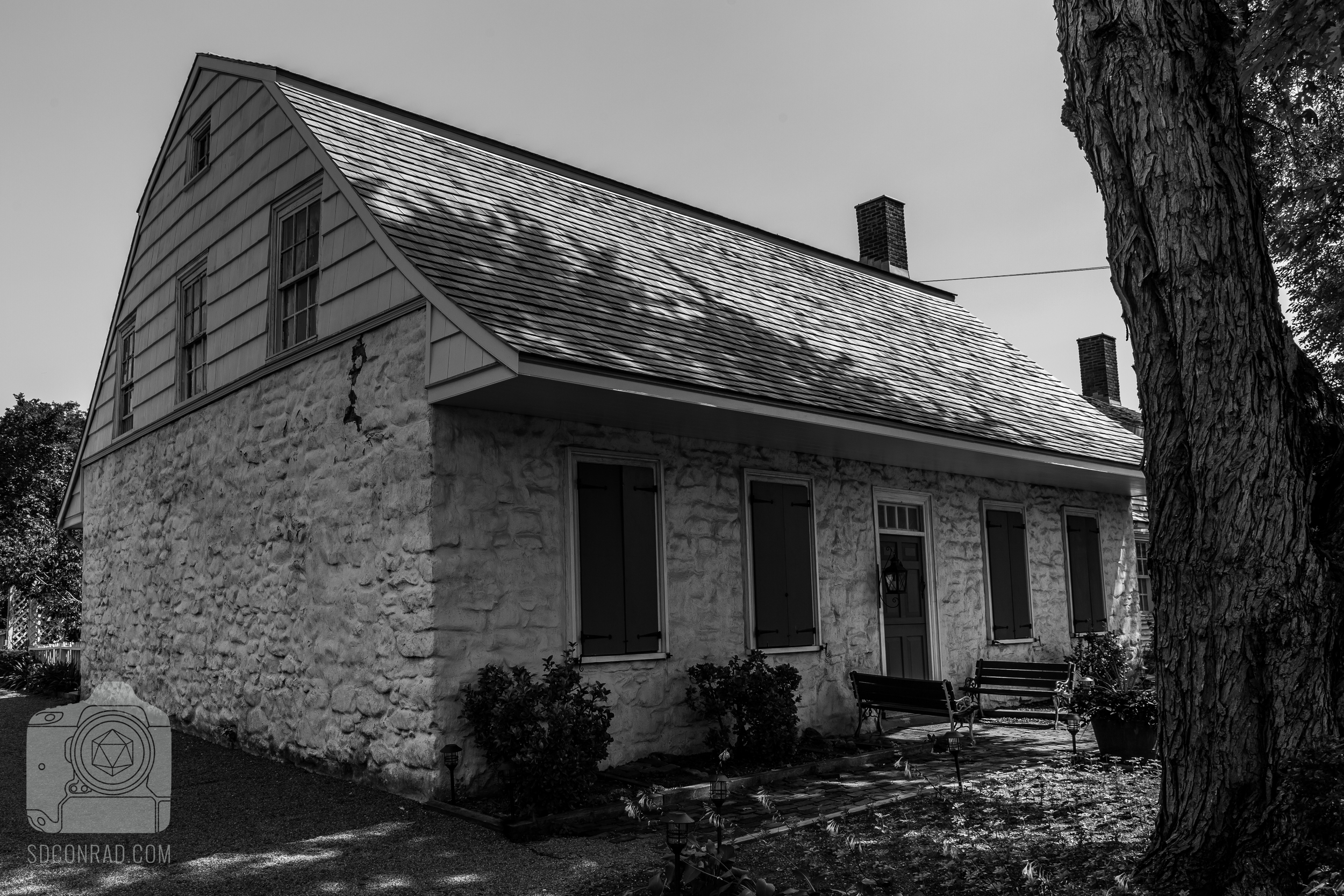
Bushwick, Brooklyn and Ridgewood, Queens have a long history of border disputes, which have resulted in the zig-zag pattern of the border today. But there's one building Bushwick can't claim, and that's the Onderdonk House of Ridgewood, Queens.
The neighborhood where I live is a hotly contested spot. Sometimes it belongs to Queens, sometimes it belongs to Brooklyn. As of right now, the border forms a zig-zag pattern down one street. So when you walk down the street you can say "I'm in Brooklyn. Now I'm in Queens! Now I'm back in Brooklyn!" without leaving that same street. But there's one building in Ridgewood, Queens that Brooklyn can't lay its hands on, and that's the Onderdonk House.
The land was acquired by Hendrick Barents Smidt as a grant from Peter Stuyvesant in 1661. At that time, Stuyvesant was the Director-General of the Dutch Colony New Amsterdam. Which, of course, was renamed New York in 1667 after a trade with the English.
In 1709 Paulus Vander Ende purchased the land from Hendrick Barents Smidt and built the stone house that currently sits on the land, just next to the foundation of Smidt's house. "Onderdonk House" is the shortened version of the full name, which is Vander Ende-Onderdonk House. Smidt's name is not included because techincally, the house that currently stands, isn't the one that Smidt built. The Onderdonk family adds their name later.
1769 is when the border disputes between Newtown, Queens and Bushwick, Kings (Brooklyn) which resulted in the zig-zag pattern we have today. Although the zig-zag has changed a few times over the years as the dispute rages on. Some buildings even begin in Brooklyn and end in Queens.
1820 saw renovations under new ownership. Adrian Onderdonk extended the house to include the foundation of the Smidt's original structure. The house has seen little changes since then, despite a fire in 1975 which destroyed large portions of the house. After years of pulling together funds and getting crews to work, the house opened again to the public in 1982.
You can visit the house on Saturdays between 1 and 5pm with a suggested donation of $3.00. A small price to pay to see New York's oldest Dutch Colonial house. A piece of history few get to see, or even know exists. I'm sure there are people in this neighborhood where I live who have no idea the rich history that is just down the road. Along with tours there are all kinds of events that take place. From live music to various holiday specials, it's a place of rich history that every New Yorker should experience.
What is this?
I am a freelance photographer and this blog is about my life as such. Sometimes I just need to vent. Sometimes I need to write down my thoughts to remind myself how I should be working. Other times I might just want to write about how I love my dog.
Why is this?
I believe it's important to get your thoughts out of your head sometimes. Some people write a journal for their own safe keeping. Other see therapists. I'm going to share my thoughts with the public. Feel free to communicate with me!