
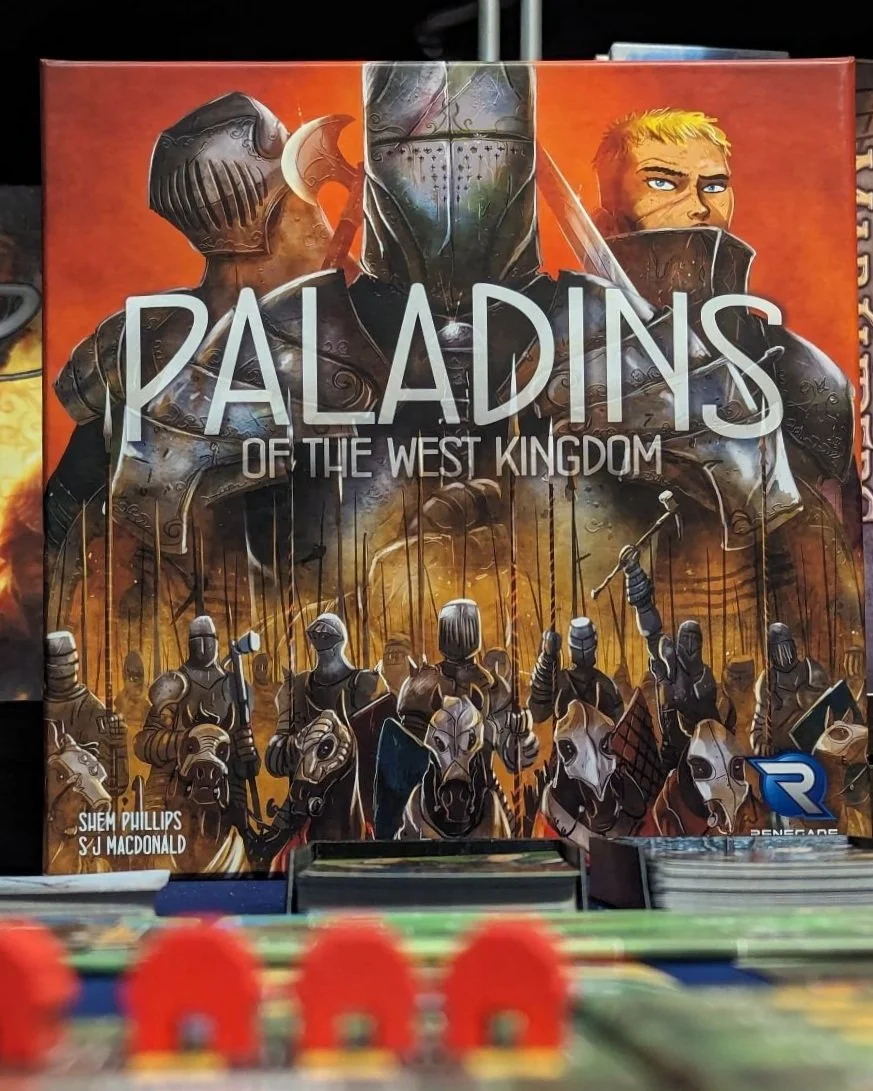
Favorite Board Games I played in 2023 - Paladins of the West Kingdom
Paladins of the West Kingdom is the second game in the West Kingdom series, following up the successful Architects of the West Kingdom. I bought Paladins at the recommendation from a friend without knowing anything about it and to be honest, I’m so bad at it I’m not sure I fully understand it to this day. There is a lot going on in this game and I don’t even know where to start explaining it.

At the end of 2022 I decided I needed to play more board games. I have a big shelf filled with games but my time playing them has dwindled over the years. When I first go into the hobby I had a few friends in my neighborhood who were just as interested in playing my games as me. It was easy to get a game night together on any random weeknight because we could just walk to each other’s apartments and have a good time. Slowly but surely, those friends moved from NYC to explore opportunities in the west. From that point on, it was maybe once a month, if that, I got to play board games. As the years progressed, that once a month average was reduced to maybe a year or more without playing a single game. My interest in board games hadn’t gone anywhere, just the people I could rely on playing on a regular basis. I had never thought about playing solo because, to me, board games were a social thing. Until I really thought about some of my favorite games, many of them are basically solitaire games with other people around. A friend of mine in a different state also pretty much only plays solo games. So for 2023 when I decided to do the 10x10 challenge (play 10 games 10 different times) I figured the best way to complete it was to invest in solo games. The first game I bought specifically because I heard it had a solid solo component was Paladins of the West Kingdom.
Paladins of the West Kingdom is designed by Shem Phillips and published by his own company Garphill Games. Over the years, Shem has developed a system of designing games in different settings, starting with the North Sea series. Unbeknownst to me, before purchasing Paladins I had played a Shem Phillips game already - Explorers of the North Sea. Raiders is a really fun pick up and deliver style game. Each player commands a longboat and a crew of vikings exploring the North Sea. As you explore, you reveal hexes that display what your vikings discover. Sometimes it’s chickens. Sometimes it’s a settlement. Sometimes it’s an enemy boat. When you find livestock you place the meeple of that animal on the revealed hex. You can choose to load the livestock onto your longboat or you can leave it there and hope your opponents don’t get to it first. For some reason I find a lot of joy in seeing my little longboat with two vikings and a chicken on it, sailing around the North Sea. To me, that visual is something that would draw in the random passer-by. After finishing the North Sea series, Garphill moved onto The West Kingdom series.
Paladins of the West Kingdom is the second game in the series, following up the successful Architects of the West Kingdom. I bought Paladins at the recommendation from a friend without knowing anything about it and to be honest, I’m so bad at it I’m not sure I fully understand it to this day. There is a lot going on in this game, I don’t even know where to start explaining it. In this game, you start your turn by picking one of three Paladin cards you draw from your personal deck. Each player has the same deck, but which cards you draw will be random each game and each round. That paladin has a special ability for you to use for the round. They also start you with 2 paladins of certain colors and gives you a bonus to your military strength, your political standing, and your standing with the faith. You use these attributes to determine the strength of some of the available actions. You also take a tavern card, which will give you four more meeples of different colors to place throughout your turn.
On your turn, you have a myriad of options before you. On the left side of your player board you have basic actions like gain money, gain provisions, recruit villagers, and upgrade actions on the right side of your board. On the right side of the board is where things really get intense. There are a number of actions here that cost 3 meeples each. Each action requires 2 meeples of specific colors and 1 meeple of any color. If you have the resources, you can use the upgrade action on the left side of the board to upgrade one of these actions on the right. Each right side action can be upgraded twice, leaving only one colored meeple spot revealed. Many of these actions also cost provisions or money and require a certain level of attribute to complete. These actions also raise attribute levels the more you perform them. The goal is to develop an engine where one action feeds another action, that feeds another, that feeds another.

Now, like I said, I bought this game for the solo mode and have only played it solo so far. The first few games made me feel like my brain was on fire trying to control everything. Not only am I thinking about my own strategy, but I also have to remember how to run the AI board as well. But I have to say, after two or three games, I understood the AI enough to make it feel almost like autopilot to allow me to focus on my own strategy. With that said - the only wins I have under my belt where either because I did something wrong or because I got very lucky with how the AI actions were timed.
This game is also about timing. When you decide to perform an action is crucial because you have only so many actions you can take per round so it’s important you get the right paladin out and utilize their benefit as much as possible. If you lose, it’s because you just didn’t play well. This sounds silly but there are games where you can play poorly and still do well because of random factors. When you lose Paladins, you mostly have only yourself to blame. I still have yet to get a real strong grasp of the strategy in Paladins but each time I play I want to reset and try again. I feel like I’m very close to truly understanding it but I’m not quite there.
With all that said, despite the crushing defeats and feel like a complete moron, I couldn’t be happier with it. The AI feels like another player playing next to you. The strategy is difficult but rewarding. If I had to complain about anything it’s that there’s no clear opening move strategy to help you move along. At the start of the game any new player, despite knowing the rules, could feel completely lost as to what to do first. The internal storage is also a complete mess. The components barely fit in the box. I bought a 3D printed internal storage solution but there’s still a 5-10mm raise on the lid. It’s not ideal, but it’s better than as-shipped.
Even though I love Paladins as a solo game, I don’t know if I would ever recommend it to anyone. It’s a very heavy Euro style game that is very punishing to new players. I haven’t played it multiplayer, so I’m curious to see how it goes and how it’s received by other players, but as of now, I’d say look elsewhere unless you are really into the hobby and want to get into solo gaming. It is solidly my favorite solo game in my collection, but I’m holding my breath on it being a hit as a multiplayer game.
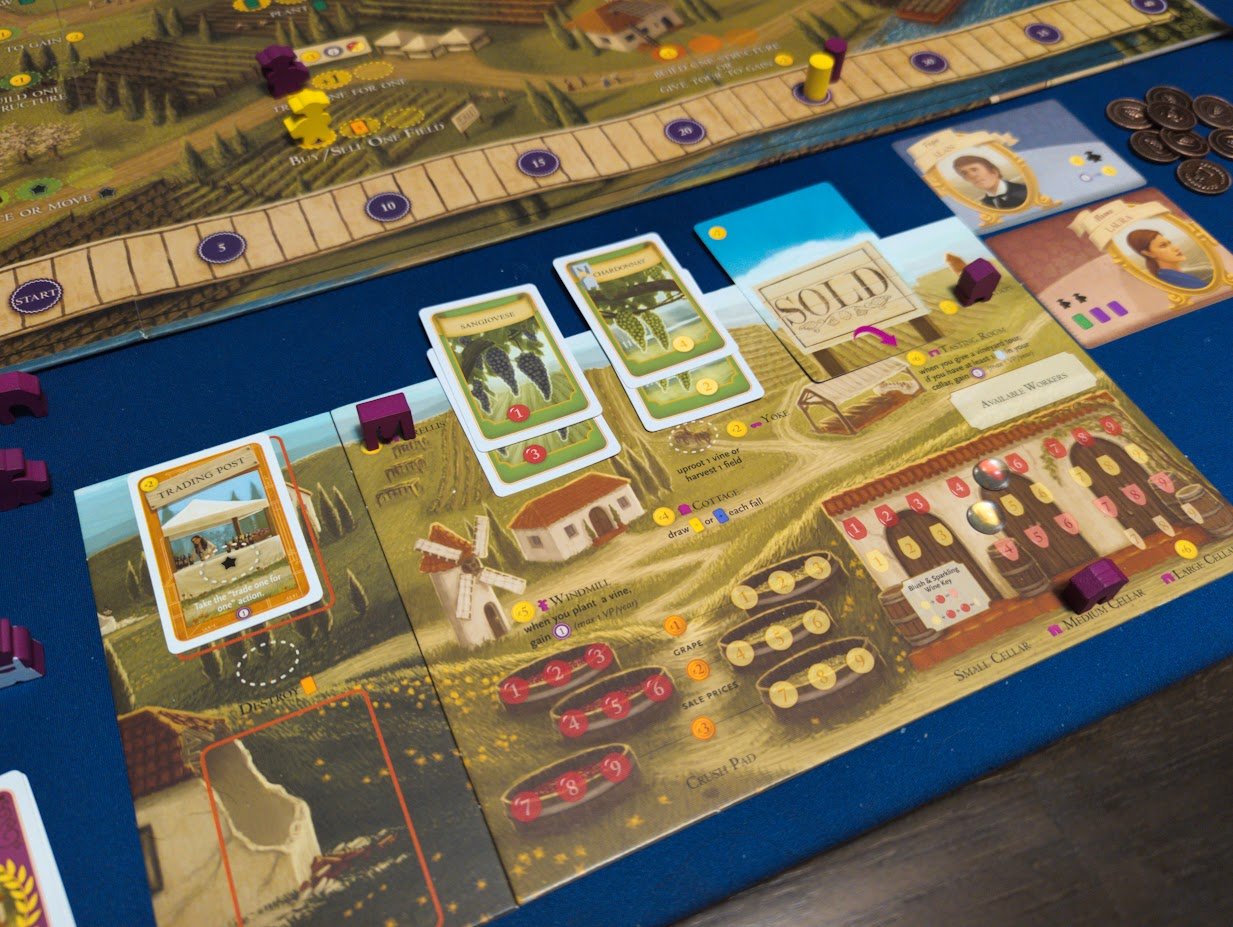
Favorite Board Games I played in 2023 - Viticulture
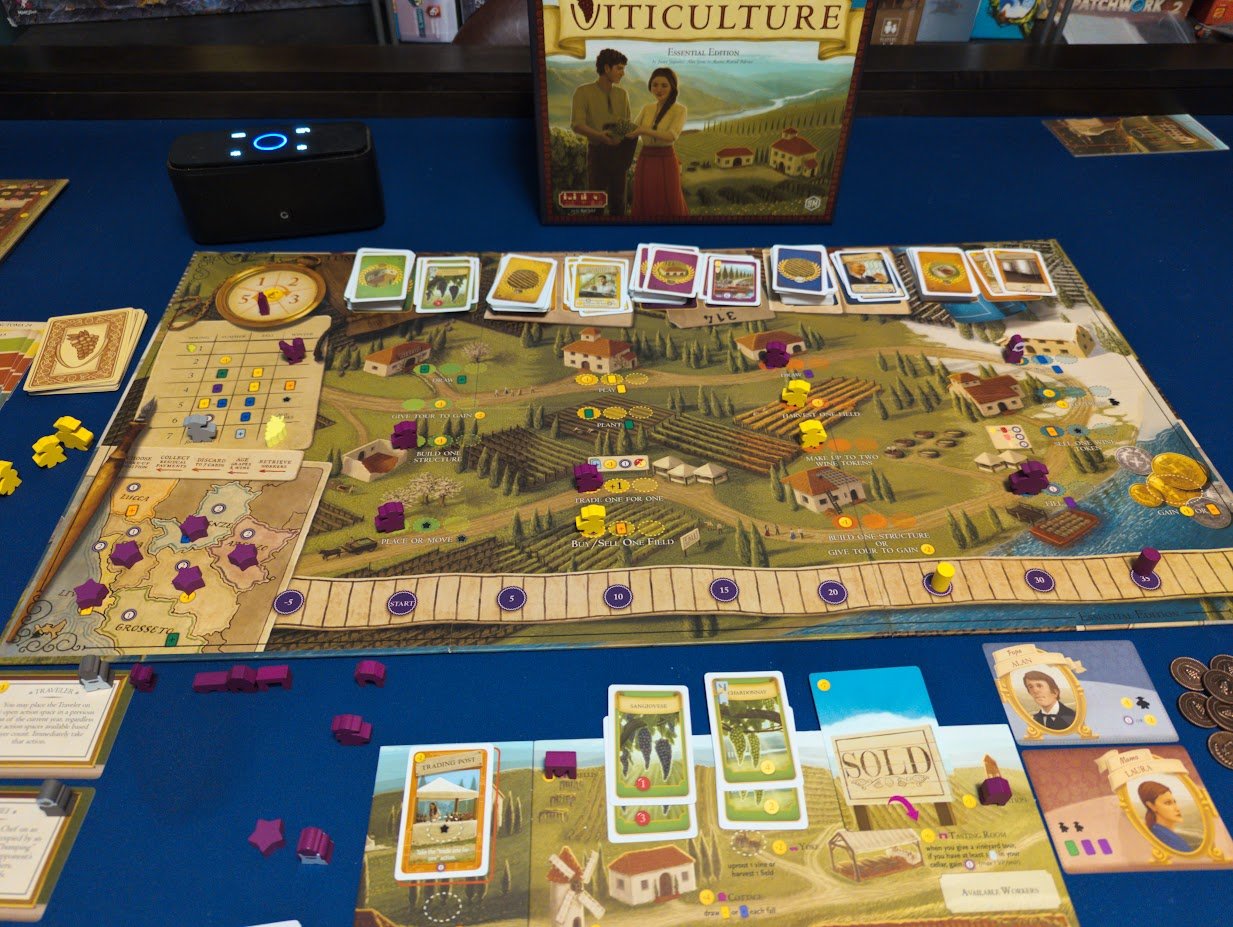
Viticulture is a worker placement game that takes place over many years where each player competes to develop the most functional and profitable vineyard. There is a central board that has spaces for Summer actions and for Winter actions. In the Summer, the actions available typically focus on growing new crops, constructing buildings, and things of that nature. In the winter, you harvest and perform actions to increase profit. Each player starts with 3 workers but in the winter you can hire more workers who will permanently join your vineyard for the remainder of the game. Players with the most victory points at the end of the game win!

“Age and glasses of wine should never be counted…” except for when you’re playing Viticulture. In my previous post about Wingspan I mentioned that it was the gateway to other Stonemaier games. Viticulture was the first big hit for Stonemaier and is the sole reason why Stonemaier has its name. It is designed by Jamey Stegmaier and Alan Stone. At the time, neither had board games of much significance in production, so they combined their names to create the name Stonemaier. Today, Alan Stone doesn’t have many credits while Jamey Stegmaier continues to be a giant in the world of board game design. Viticulture is a worker placement game that takes place over many years where each player competes to develop the most functional and profitable vineyard. There is a central board that has spaces for Summer actions and for Winter actions. In the Summer, the actions available typically focus on growing new crops, constructing buildings, and things of that nature. In the winter, you harvest and perform actions to increase profit. Each player starts with 3 workers but in the winter you can hire more workers who will permanently join your vineyard for the remainder of the game. Players with the most victory points at the end of the game win!
At first glance - the main way to gain victory points is by selling wine. This seems like the optimal action because that’s what the whole game is about! However; there is only one opportunity to sell wine, and that’s in the winter. With your Grande worker able to take actions that are already occupied, you’re able to ship 2 wine orders per year, maximum. That’s if you’re very lucky. Many of the wine actions take multiple years to fulfill. There are four types of wine to ship - White, Red, Blush, and Sparkling. To create white wine you must have white grapes growing in your vineyard. To make red, you need red grapes. Easy stuff. To make blush, you need to combine 1 red grape with 1 white grape. To make sparkling, you need 2 red grapes and 1 white. But that’s not all, you need a medium cellar to make blush and you need a large cellar to make sparkling. So even though blush and sparkling are great money makers, you need to invest quite a lot of money to even be able to produce these high value wines.
To help you along there are two types of cards players will be drawing throughout the game. These are Summer and Winter visitor cards. These cards typically contain powerful abilities that come with great benefit when timed right. Some of these abilities include constructing beneficial buildings at lower cost, performing multiple actions you normally can’t do together, and sometimes trading in grapes or wine for cash or victory points. These cards generate an alternative path to victory outside of the obvious of fulfilling wine orders. I’ve played games where my opponent fulfilled zero wine orders and won. In fact, I’ve seen people use this as a strategy more often than just wine order shipping.
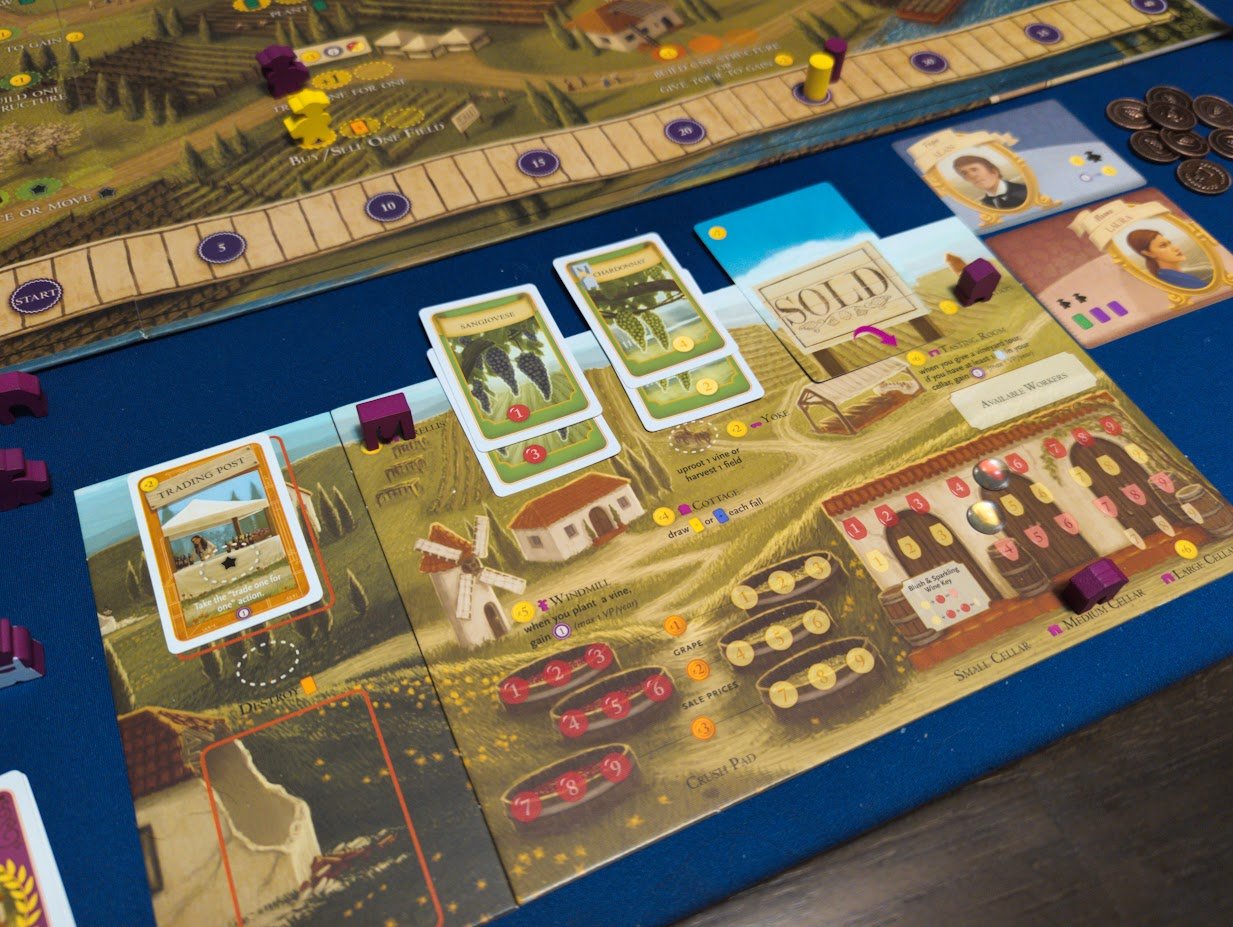
This is something that fascinates me about Viticulture. The strategies one can employ are variable and fun. I love fulfilling wine orders. To me, that’s the most straightforward goal and the most thematic. I win with enough regularity to not think I need to adjust my strategy, I just need to be better about adjusting my strategy if I’m not getting the wine orders that fit with my board layout. The game is all about timing and building your engine. One game I still think about to this day is when I was playing a three player game where two of us recruited the maximum number of workers. To me, racing to get your final worker is a must. The more workers you have, the more options you have to win. But in this game, my friend Nick didn’t even bother getting his 6th worker, he just went with 5. He had an engine going that didn’t need 5. Looking back, Darryl and I were often at a loss as to what to do with your 6th worker. We barely benefited from having all 6. Nick won that game and it made me really rethink how I go about getting more workers. You clearly don’t need all 6 to win, which is fascinating to me.

Viticulture is one of my top games of all time. But do you want to know what’s better? Viticulture Tuscany: Essential Edition. It’s everything love about Viticulture but way more. Instead of placing workers in 2 season, you’re now placing workers in all 4 seasons. More actions are available but the number of workers you have hasn’t increased. It’s still a race to get to the good spots first but since you have more options you never feel like you’re lagging behind on strategy. There are more options to develop a secondary strategy and maintain relevance in the game. If you lose, it’s largely your fault for not being able to adjust your strategy. Worker placement games are often cutthroat but with Viticulture Tuscany: Essential Edition you’re given opportunities to turn the knife on your opponent. Your options open up to win so if you lose, you likely did it to yourself.
Have you played Viticulture? Have you played it with the Tuscany expansion? Do you prefer it with or without? Let me know in the comments!
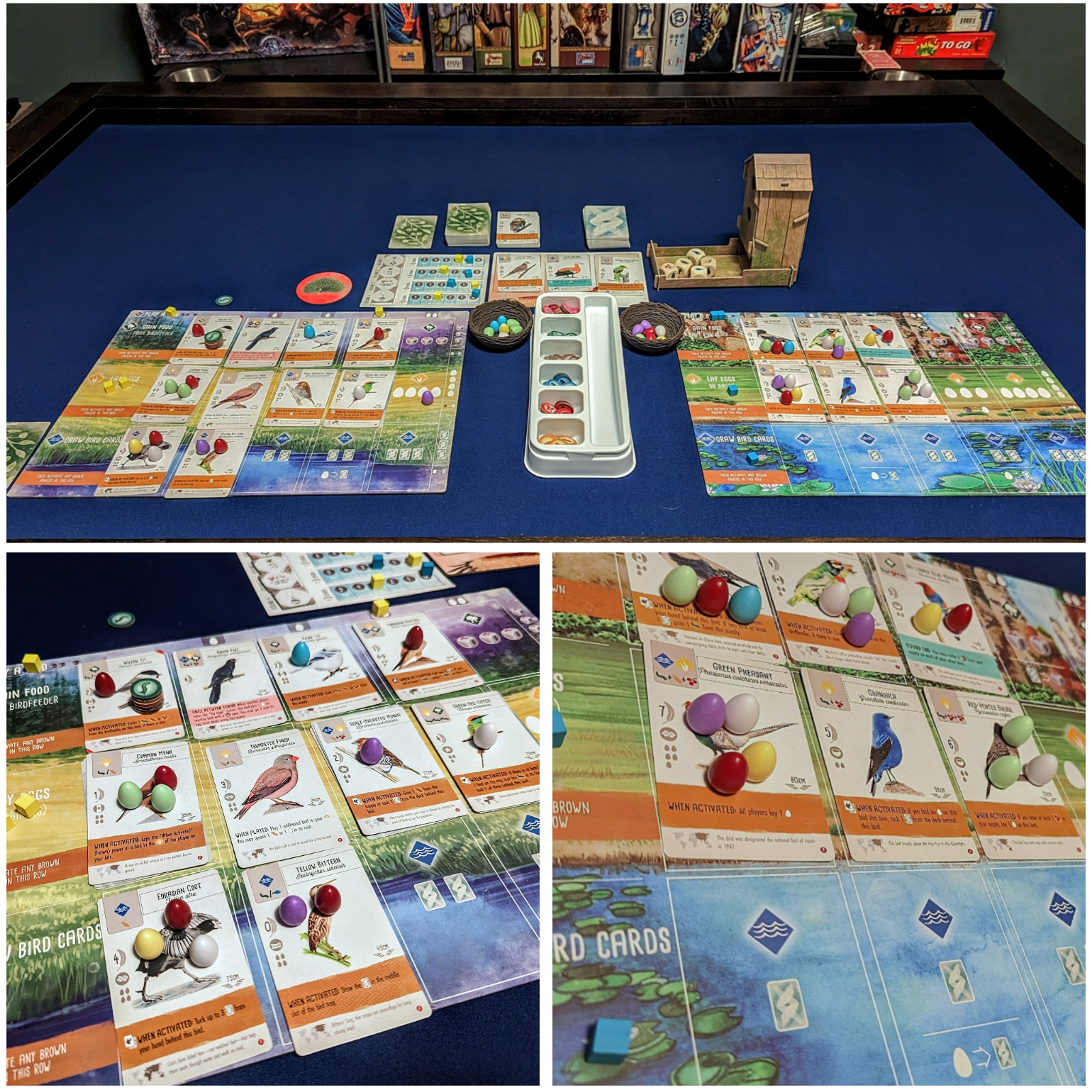
Favorite Board Games I played in 2023 - Wingspan
Wingspan has been one of my top games since its original release in 2019. At that time, I wasn’t incredibly familiar with the publisher, Stonemaier Games. I was aware of games like Viticulture and Scythe but I just hadn’t gotten around to playing them. I also had never heard of the designer, Elisabeth Hargrave, but to be fair, even the most hardcore board gamers had never heard of her either, as Wingspan was her first major game going into production.

Wingspan has been one of my top games since its original release in 2019. At that time, I wasn’t incredibly familiar with the publisher, Stonemaier Games. I was aware of games like Viticulture and Scythe but I just hadn’t gotten around to playing them. I also had never heard of the designer, Elisabeth Hargrave, but to be fair, even the most hardcore board gamers had never heard of her either, as Wingspan was her first major game going into production.
I decided Wingspan was a must-buy on artwork alone. One look at the box and I said “yep… that’s a buy.” When I show it to friends who don’t play a lot of board games they’re immediately attracted to it. Once I open the box and they see the colorful eggs the excitement grows. The player boards look like field notebooks when folded and when you open them up you’re hit with some bright colors and more delightful artwork. Then the bird house gets built and that’s where we hit maximum levels of excitement. Look at all this stuff! Colorful eggs, colorful board, cute little bird house… and then the cards come out and a sense of dread hits. “Wait a second, how many cards are there?” 170 I say. “170!?” Yes, I say. Well, 170 in the base game with an additional 255 with all the expansions. With that bombshell, a dark cloud looms over the table. You have nothing to fear, I say, we won’t be using all of the cards. You only need to know what a few symbols and colors mean and you can play the game. “Ok” they say “that’s not a big deal.” Then it comes time to explain how to play and the dread returns…
On your turn, you place a cube onto your player board in the left most empty space of the biome you wish to activate. This can be confusing for new players, especially players that don’t play a lot of board games. “Left most empty space? How do I know which one is most empty?” No no, left-most space that is empty, as in, there’s no bird in that spot. “Ok…” once you take that action your cube slides to the left. If it enters a space occupied by a bird, you activate the power of that bird, if it has a power, and you continue sliding your cube left activating birds until you reach the end and your turn is over! It’s easy! Faces sometimes glaze over with this explanation. But the combination of the colorful eggs and birds and boards and every other inviting aspect of the game usually gets people to push forward and try to play.
And thank the lord the artwork is so inviting because there is a really fun game behind it. Sometimes, games with great artwork and cool minis make me think - “What are you hiding behind all of this?” I got burned one time on a game that I won’t name that came with really cool minis and neat artwork. It was an instant buy for me on look alone. Unfortunately, when I finally got to play it, it was a really bland game. It was far too random for what the game wanted you to do. It was billed as a strategic combat/adventure game but in the end it was just a random number generator where you win or lose at the end, regardless of your strategic prowess. Ever since then, I typically research a game quite a bit before pulling the trigger. However; Wingspan made me break that rule, and I’m glad it did, because it introduced me to the rest of the games in the Stonemaier catalog.
Viticulture
Since getting Wingspan I have since added a number of Stonemaier games to my collection. Scythe, Viticulture, Charterstone, Between Two Cities, Tapestry, and the recently released games Apiary and Expeditions. Scythe and Viticulture are two of my top games of all time and most of the others would probably be rated that high if they were the only ones I’ve played. However; there is one dud, in my opinion, in that list and it’s Tapestry. I don’t know why, but it just doesn’t work for me. I don’t mind a good point salad but this is the most point salad game I’ve ever seen. The scoreboard goes up over 400. But the scores are wildly variable from game-to-game. I have won scoring less than 100 and I’ve lost scoring 300 because the variables between games are just too much. There are 4 basic actions you can take during the game and none of them feel really satisfying. Honestly, the only thing Tapestry has going for it is… get this… the minis. Once again, excellent minis are a wall built around a mediocre game.

Thankfully, Wingspan is not one of these games. The excellent artwork isn’t there to distract you from a bad game, it’s there to draw you into a great game. Yes, there are a lot of variable factors between games and the scores can be variable because of it, it is not 100+ point swings. Each game has its own internal strategy that you have to develop. And even if you can’t get your engine going to score big points, look at those birds! At least you got some excellent artwork staring back at you.
What is this?
I am a freelance photographer and this blog is about my life as such. Sometimes I just need to vent. Sometimes I need to write down my thoughts to remind myself how I should be working. Other times I might just want to write about how I love my dog.
Why is this?
I believe it's important to get your thoughts out of your head sometimes. Some people write a journal for their own safe keeping. Other see therapists. I'm going to share my thoughts with the public. Feel free to communicate with me!